Kentucky's No-Fault Law Leaves Motorcyclists Out: The Coverage Gap That Blindsides Riders
If you ride around Louisville, you have probably heard that Kentucky is a no-fault state and assumed that means your own insurance pays your medical bills after a crash no matter who caused it. For the drivers in cars and trucks next to you on the Watterson, that is basically true. For you on two wheels, it is not.
What Basic Reparation Benefits Actually Are
BRB, often called PIP in other states, was built to keep small crashes out of court. When two cars bump on I-264, each driver's own BRB pays their initial medical costs fast, without anyone proving fault first. That is the trade at the center of Kentucky's no-fault system: quicker payment up front, in exchange for limits on when a person can sue over minor injuries.
The problem for riders is that the whole structure was written around four-wheeled vehicles. Motorcycles were carved out. So while the driver who hit you has BRB working quietly in the background, you as the rider are standing outside that system looking in. Kentucky simply does not require a motorcycle to carry BRB, and most riders never add it.
The Coverage Gap in Real Life
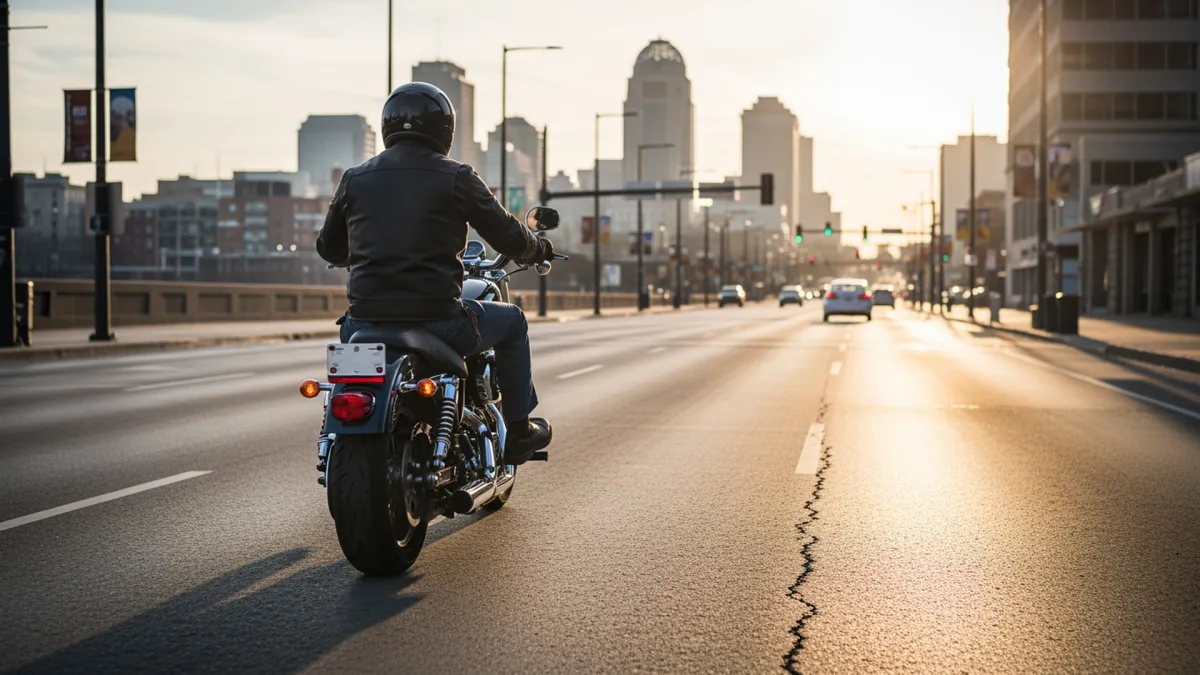
Picture a common Louisville scenario. You are heading north toward the Kennedy Bridge on a clear evening. A driver drifts out of a turn lane at Spaghetti Junction without looking and clips your front wheel. You go down. Ambulance, emergency room, imaging, maybe surgery. Now the hard questions start about who pays, and a rider quickly finds that the usual answers do not line up the way they would for a car driver.
- ✓ Your own motorcycle no-fault. Bikes are excluded from BRB, so unless you specifically bought it, it does not apply to you as a rider.
- ✓ The at-fault driver's BRB. That coverage pays their injuries, not yours.
- ✓ Your health insurance. It may help, but it often comes with deductibles, copays, network limits, and a right to be paid back out of any settlement you win.
- ✓ Money out of your own pocket. That is exactly the gap riders fall into when nothing else lines up.
None of that is a reason to park the bike. It is a reason to understand what actually stands between you and a five-figure medical bill before you ever need it.
What This Means for a Rider's Claim
Because there is no BRB smoothing things over, a Louisville rider's recovery usually depends entirely on the fault side of the case. That means proving the other driver caused the crash and pursuing their liability insurance for your medical bills, lost wages, and pain. Kentucky requires drivers to carry only minimum liability limits, so the person who hit you may not carry enough to cover a serious injury.
It also means the evidence you preserve matters more for a rider than for a car driver. With no automatic payout in the background, the strength of your claim rests on documentation: the crash scene, the other driver's conduct, witnesses, and prompt medical care. A rider who assumes no-fault will handle the bills often waits too long to protect the very claim that has to carry the whole load.
How Louisville Riders Actually Close the Gap
Since BRB is off the table by default, smart Kentucky riders build their protection somewhere else. The most important piece is Uninsured and Underinsured Motorist coverage (UM/UIM) on your own policy. With only 25/50/25 minimums on the road, the driver who hits you may carry too little to cover your injuries, and UM/UIM steps into that hole. From there it is worth asking your carrier about added no-fault or medical payments coverage for the bike, knowing your health plan's deductible and reimbursement rights, and keeping a clean record after any crash. The theme is the same across all of them. Nobody is going to hand a Kentucky motorcyclist the no-fault cushion that car drivers get, so you build your own.
If you do go down and you are hurt, the order of operations does not change just because BRB is missing. Get medical care first. Document the scene and the other driver. Do not give a recorded statement to the other side's insurer before you understand your position. Kentucky generally gives you two years to bring a motor-vehicle injury claim, so time is not unlimited, and the difference between recovering your costs and eating them often comes down to a UM/UIM provision most riders never think about until they need it.
Karl Truman and the Louisville motorcycle injury attorneys at Karl Truman Law represent riders hurt by negligent drivers. If you have questions after a crash, their team is here to help.